By Lauren Billings
For nearly 30 years, Amy New thought her heavy periods were normal.
She was just 12 when she first started leaving school early because she was bleeding through her clothes. As an adult, the symptoms followed her into work and everyday life. She couldn’t sit through a meeting, walk a job site, or attend a public event without worrying about whether she’d make it to a bathroom in time.
During her period, an hour-long meeting could mean soaking through tampons and pads , and sometimes still bleeding through her clothes, too. Keeping a change of clothes nearby was non-negotiable. As a successful business woman and busy mom, this was more than an inconvenience. Her periods were running her life.
She was stressed. She was anxious. And she was constantly planning her life around her period.
“I thought it was normal. I had been dealing with it since I was 12.”
Heavy Bleeding Can Affect Your Whole Life
Heavy menstrual bleeding isn’t simply about having a heavier period. For some women, it can mean changing plans, missing work or school, worrying constantly about leaks, or living with pain and other symptoms.
For Amy, her periods meant:
- Leaving school early as a teenager
- Taking sick days from work
- Stepping away from meetings
- Worrying about access to a bathroom
- Bleeding through her clothes in public
- Experiencing painful cramps, dizziness, and blood pressure drops
- Passing clots she describes as golf-ball sized
For years, Amy assumed these experiences were simply part of being a woman. And she’s not alone. Many women suffer in silence, assuming that what they’re experiencing is just their normal.
It isn’t. And it’s not something you have to accept.
Heavy menstrual bleeding can interfere with daily life and may be a sign of an underlying health condition. If bleeding is affecting your everyday activities, it’s worth talking with your OB/GYN about what you’re experiencing and what treatment options may be available.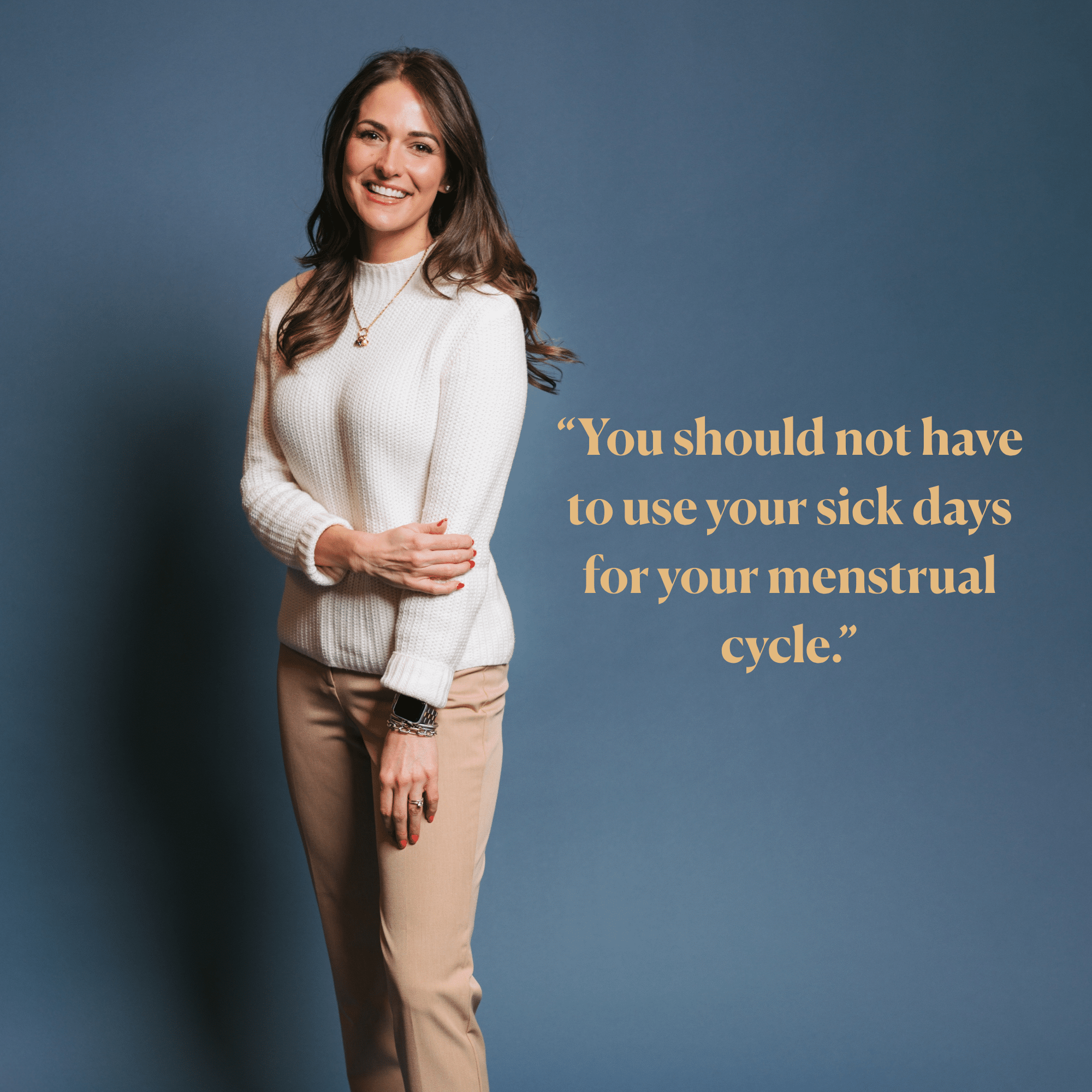
It Doesn’t Have to Be Your Normal
For Amy, the moment she realized something needed to change came after a work event.
She was in a room full of successful business men and women. She stood up to clap for a speaker, and quickly realized she had bled through everything — including her shoes and onto the ground — and ultimately had to sneak out early.
“I thought, this is not okay.”
Later, she shared what had happened with Diana Health provider Dr. Paige Gernt.
Dr. Gernt’s response was immediate:
“Honey, that is not normal. And we can help.”
For Amy, those words were powerful. After nearly three decades of believing she simply had to live with her symptoms, someone was telling her that she didn’t.
Dr. Gernt introduced her to endometrial ablation, a procedure Amy had never heard of before. They talked through what the procedure would involve, how long it would take, what she could expect afterward, and the treatment options available to her. Amy was also given educational information to review and had the opportunity to discuss cost.
“Dr. Gernt’s confidence gave me the confidence to proceed.”
Just as important, Amy says she felt completely involved in the decision-making process.
At Diana Health, we want women to know that they have options. We want them to feel informed, empowered, and supported, every step of the way.
Understanding Your Treatment Options
Endometrial ablation is a minimally invasive procedure that treats the lining of the uterus to reduce or stop menstrual bleeding. It’s a great option for appropriate patients who have experienced prolonged, heavy bleeding, that medication couldn’t treat.
For appropriate patients, endometrial ablation may be performed as an in-office procedure, although Amy ultimately chose to have her procedure in the hospital.
Endometrial ablation isn’t right for everyone, and it isn’t the only treatment option for heavy bleeding. The right approach depends on what’s causing your symptoms, as well as your health, lifestyle, and goals.
Treatment options may include:
- Medication or hormonal therapy
- Lifestyle or other supportive care
- In-office procedures
- Minimally invasive gynecologic surgery
The goal isn’t simply to offer a procedure. It’s to understand what’s happening and help you make an informed decision about your care.
Life After the Procedure
Amy’s procedure took place in November 2024. She was in and out within 3 hours, and while the first 24 hours involved some discomfort as her body healed, she mentions that the bigger change came afterward.
The dizziness, blood pressure drops, heavy bleeding, and large clots that had been part of Amy’s life for as long as she can remember are no longer something she has to plan around.
For Amy, the procedure didn’t just change her periods. It changed the confidence she had in her ability to work, attend events, and live her life without constantly worrying about bleeding.
“You should not have to use your sick days for your menstrual cycle.”
Amy is a fierce advocate for women, sharing her story boldly in hopes to normalize the conversation and encourage women to seek support.
Your Symptoms Are Worth Talking About
Amy’s story is personal, but the experience of normalizing disruptive symptoms is shared by many women.
Heavy periods. Bleeding between periods. Pelvic pain. Pelvic pressure. At Diana Health, we want to hear about these symptoms. And we want to get to the bottom of what’s causing it.
Our providers take the time to understand what you’re experiencing, get to the root of what’s causing your symptoms, and walk you through the options available to you, from lifestyle support to minimally invasive, in-office procedures, such as an endometrial ablation.
It’s okay if you don’t know what’s causing your symptoms. It’s okay if you don’t know what treatment options are available.
But we invite you to start the conversation.
If heavy bleeding is affecting your work, your relationships, your confidence, or your ability to enjoy everyday life, don’t just live with it.
Talk to a Diana Health provider about your options. A virtual visit is a great place to start–book a visit now!
*This patient testimonial was provided voluntarily and without compensation. No free services or products were given in exchange for this statement.